Gabion walls don’t need concrete
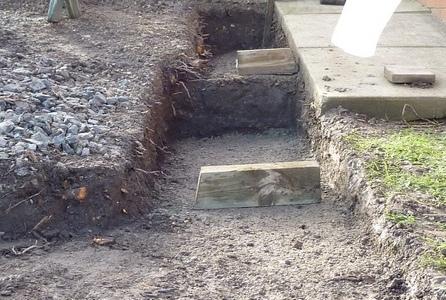
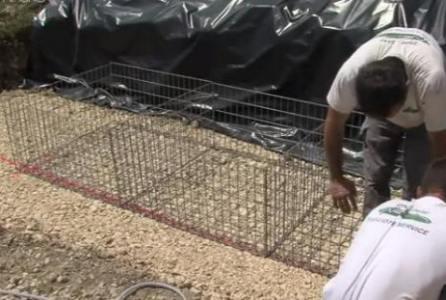
Gabion1 has 100’s of sizes, stepped foundations.
Depending on wall height, a 50-100mm layer of compacted basecourse is required.
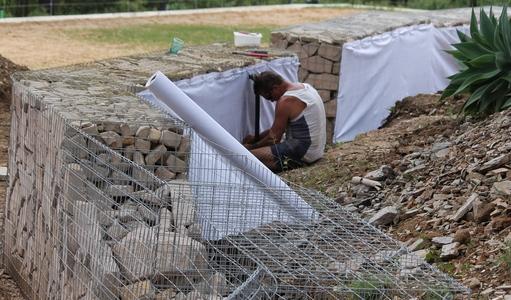
Fabric Stops Silts
Geotech filter fabric stops fine silts and clay migrating into the wall.
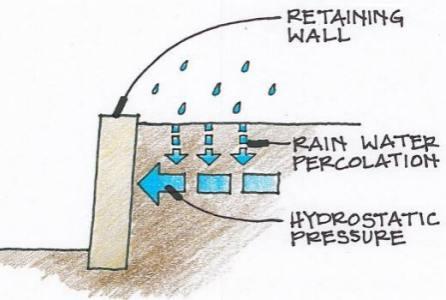
Drainage is Needed
Gabion retaining walls need adequate drainage.
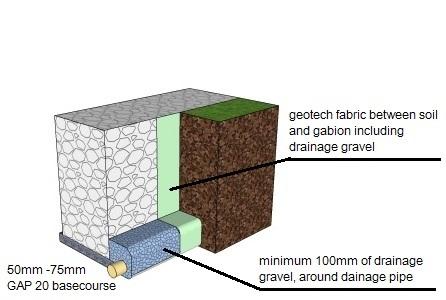
Small gabion wall under 1.0m tall
For small walls under 1.0m tall, with flat ground behind, you can place the soil against the gabion provided you install a geotech filter fabric between the soil and the gabion.
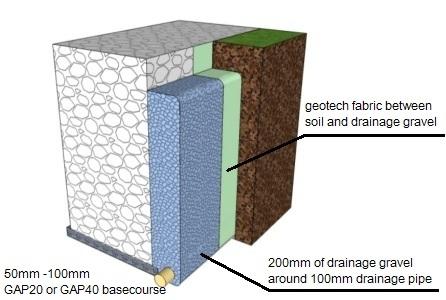
Gabion walls over 1.0m tall
Larger walls have greater loads on them. It is recommended the the drainage gravel be placed to with 150mm of the top of the wall, and that the geotech fabric is between the soil and the drainage gravel
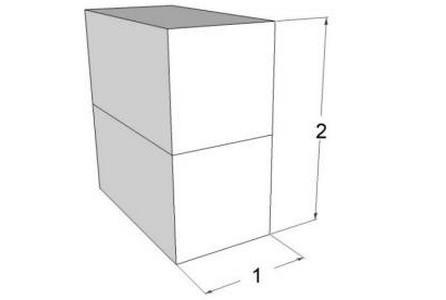
Gabion retaining walls
Walls narrower than this ratio are unsuitable for retaining applications.
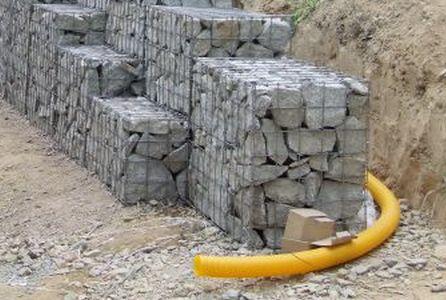
Drainage pipe at the rear
The drainage pipe is often encased in filter sock.
Gabion stability with flat land
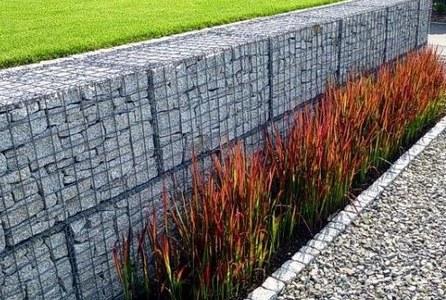
Engineered Gabion Walls
Large gabion walls with step slopes behind or buildings above, will require an engineers design.
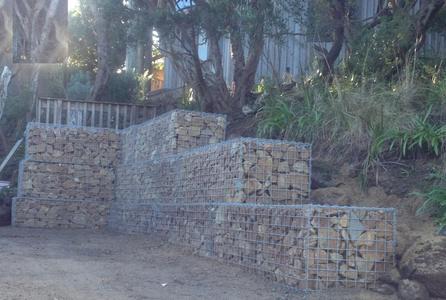
Smaller Gabion Walls
Smaller gabion walls under 1.5m tall, are able to be built vertical and still pass engineers calculations.
Retaining wall profiles and design factors
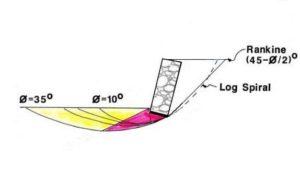
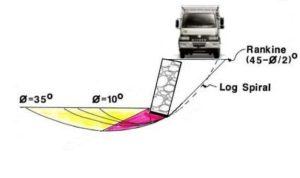
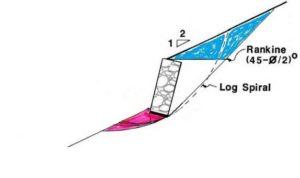
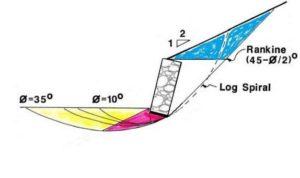
Design notes:
The retaining wall toe prevents the gabion wall sliding forwards, the depth of the toe needs to increase as the wall gets bigger. When building gabions on softer soils, both the depth of the toe and the size of the base needs to be increased to spread the load over a wider area. An engineer’s design will consider design limit states and specify the dimensions of the toe and base for your wall.
Any excavations should be checked for any flows or seepage that require drainage measures. Any flows, seepage or standing water should be directed to a suitable outfall as soon as they are encountered. The wall drainage must be inspected and maintained (rodded/jetted) annually and after particularly heavy rainfall events. This is essential to prevent the pore water pressures increasing behind any retaining wall.
For larger retaining walls and difficult sites, it is recommended that a soil investigation is undertaken and that the wall is designed by a qualified geotechnical engineer.
If a safety fence or barrier is placed along the top of a gabion wall, to prevent falls. It is assumed that this fence will be post and mesh, or open boarded, so as to not add any wind or impact loads to the gabion structure. Possible wind and impact loads need to be considered and the design revised to accommodate these loads on the gabion retaining wall.
Temporary excavations have the potential to collapse rapidly and without warning, and may become unstable during wet weather. Contractors should plan their work to reduce this risk of collapse and consider the use of temporary propping during construction.
No liability is accepted where a typical section is used as a the basis for the final design. The suggested details provided are guidelines only for budget purposes.
It is assumed that any building foundations on the retained side of the walls will be taken to such as level so as to ensure that no loads are transferred to the Gabions or backfill. The building
foundations must not rely on the Gabions or for support, and are outside the scope of simple designs for budget purposes.
When the gabion retaining wall is subjected to a additional surcharges, from a driveway or other loads, the designer will most likely increase the thickness of the gabions, to handle the higher expected loads.
Most gabion retaining walls can be built on soils with a minimum bearing capacity of 100Kpa. Any soft, loose, organic or unsuitable material must be removed and replaced with compacted granular fill.
When constructing gabion retaining walls in strongly acidic soils(PH over 5.5), the soil and the corrosive groundwater must be separated from the gabion structure by using geotextile fabrics and a properly designed drainage system.
For advice or assistance with the design of an economical gabion wall, please email our [email protected]
INTERESTING LINKS
PAGES
- 1.5:1 Gabion baskets
- 1.5:1 Gabion baskets under 1.2m
- 10 things you need to know about gabions
- 2:1 Gabion baskets
- 2:1 Gabion baskets under 1.2m
- 3:1 Gabion baskets, support posts required
- 4:1 Gabion baskets, support posts required
- Cart
- Cart
- Checkout
- Contact Us
- Custom Size and Pricing Form
- Gabion Basket Assembly Instructions
- Gabion Basket Curved Wall Examples
- Gabion Basket Curved Wall How To
- Gabion Basket Design Life Chart
- Gabion Basket Furniture
- Gabion Basket Information
- Gabion Basket Information Pin
- Gabion Basket Information Pin-pro
- Gabion Basket Information-g-disp-m-home
- Gabion Basket Information-g-disp-m-home-1
- Gabion Basket Information-g-disp-m-home-1a
- Gabion Basket Information-g-disp-m-home-1b
- Gabion Basket Information-g-disp-m-home-1c
- Gabion Basket Information-g-disp-m-home-1d
- Gabion Basket Information-g-rem-d
- Gabion Basket Information-g-rem-d-1
- Gabion Basket Information-g-rem-m
- Gabion baskets under 1200mm tall (4′)
- Gabion component prices
- Gabion corten corner assembly information
- Gabion Cube baskets
- Gabion Diaphragm
- Gabion Erosion Control
- Gabion fences
- Gabion fixing systems
- Gabion Foundations
- Gabion Furniture Construction Details
- Gabion Furniture Construction Details-2
- Gabion Furniture Construction Details-3
- Gabion Furniture Construction Details-4
- Gabion Furniture Construction Details-5
- Gabion Furniture Construction Details-6
- Gabion Furniture Construction Details-7
- Gabion Furniture Construction Details-8
- Gabion how to videos
- Gabion Information Pin-1
- Gabion Information Pin-10
- Gabion Information pin-11
- Gabion Information Pin-12
- Gabion Information Pin-13
- Gabion Information Pin-4
- Gabion Information Pin-6
- Gabion Information Pin-7
- Gabion Information Pin-8
- Gabion Mesh Repairs
- Gabion Outdoor Dining Table
- Gabion Pillar & Columns
- Gabion Pizza Oven Bases
- Gabion Railway Ballast
- Gabion rebar
- Gabion Retaining Wall
- Gabion Retaining Wall Blocks
- Gabion Retaining Wall Design Guidelines
- Gabion Retaining Wall Design Guidelines
- Gabion Retaining Walls
- Gabion Rock Size
- Gabion rock suppliers
- Gabion Sacks
- Gabion Step Options
- Gabion wall stability guidelines
- Gabion Wire Mesh Size Information
- Gabions 48% cheaper than timber
- Homepage
- How to order and buy your gabions
- Kitset Gabion Prices
- Kitset Retaining Wall Gabion Prices under 1.2m tall
- My Account
- Product help
- Product Inquiry
- Shop
- Square gabions
CATEGORIES
ARCHIVE